Building a strong brand identity requires clear positioning, consistent visual design, a distinctive brand voice, and a reliable customer experience. Businesses should understand their audience, define their brand values, develop recognizable design elements, and maintain consistency across platforms. A Branding Agency in Jaipur can help businesses connect these elements through a structured brand strategy.
A memorable business is not built through a logo alone. Customers recognize brands through their messages, design, values, and the experiences they deliver.
In 2026, brand identity extends across websites, social media, Google Search, AI-generated recommendations, advertising, and customer interactions.
Businesses competing in growing markets like Jaipur need more than attractive visuals. They need a consistent identity that communicates what makes them different.
What Is Brand Identity, and Why Does It Matter?
Brand identity is the collection of visual, verbal, and strategic elements that make a business recognizable. It includes the logo, typography, color palette, messaging, tone of voice, and overall brand presentation. A strong identity helps customers distinguish a business from competitors and understand its value.
Essential Elements of Brand Identity
- Brand positioning: Defines the business's unique place in its market.
- Logo and visual identity: Establish recognizable design characteristics.
- Brand voice: Creates a consistent communication style.
- Brand values: Explain the principles guiding business decisions.
- Brand guidelines: Maintain consistency across marketing materials.
- Customer experience: Reinforces the brand promise through actual interactions.
For example, a premium real estate developer may use refined typography, architectural photography, and understated colors to communicate exclusivity.
An affordable consumer brand might emphasize accessibility, simplicity, and everyday usefulness.
Both approaches can work when aligned with audience expectations.
Brand identity communicates who a business is, what it offers, and why customers should remember it.
Why Is Strong Branding Important for Business Growth in 2026?
Strong branding supports recognition, trust, customer preference, and marketing consistency. When audiences encounter the same identity across different channels, they can identify the business more easily. Consistency also helps teams communicate clearly, reducing confusion between brand promises, advertisements, and customer experiences.
- Builds Brand Recognition: Recognizable visual elements make it easier for customers to identify a business. A consistent logo, color palette, and visual style help connect individual marketing campaigns to the same brand.
- Supports Customer Trust: Customers evaluate businesses through multiple touchpoints before making decisions. Professional website design, clear messaging, transparent information, and consistent customer service can strengthen confidence.
- Makes Marketing More Consistent: Brand guidelines provide a shared reference for designers, advertisers, writers, and sales teams. This reduces unnecessary redesigns and conflicting messages.
- Creates Meaningful Differentiation: Two companies may offer similar products but communicate different values. Brand positioning helps explain why one solution is better suited to a particular audience.
- Supports Digital Discoverability: Consistent business information helps users recognize a company across its website, business profiles, articles, and social platforms. For AI search visibility, businesses also benefit from clear descriptions, credible information, and publicly accessible evidence of their expertise.
Branding does not guarantee sales or search rankings. It creates a clearer foundation for marketing, recognition, and customer decision-making.
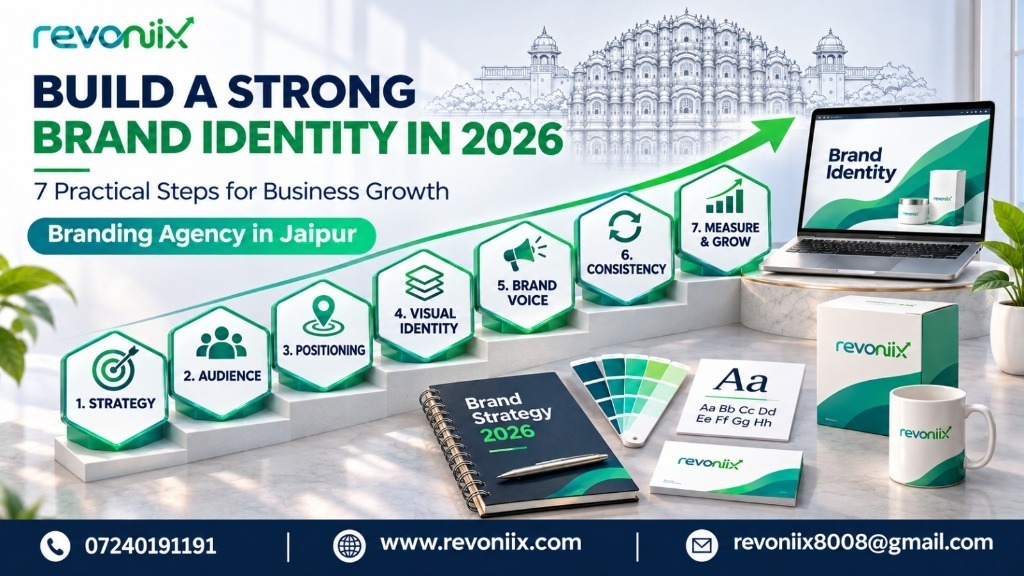
How Can Businesses Build a Strong Brand Identity? Seven Practical Steps
Creating a recognizable brand requires research, strategic decisions, visual consistency, and ongoing evaluation. Businesses should begin with customer understanding rather than immediately designing a logo. Each development stage should connect the brand's identity with its commercial objectives and customer expectations.
Step 1: Understand Your Target Audience
Identify the customers your business serves and the problems they want solved. Research their purchasing motivations, priorities, expectations, and preferred communication channels.
Useful research methods include:
- Customer interviews and surveys.
- Competitor website reviews.
- Sales-team feedback.
- Customer support inquiries.
- Website and campaign analytics.
Create two or three customer profiles representing meaningful audience segments.
Step 2: Define Your Brand Positioning
Positioning explains what your business offers, whom it serves, and what makes it valuable.
A useful positioning statement answers three questions:
- Who is our ideal customer?
- What important problem do we solve?
- Why should customers choose us?
Avoid generic claims like "best quality" unless credible evidence supports them. Instead, explain specific differentiators such as specialist expertise, responsive service, or a distinctive product experience.
Step 3: Develop a Consistent Visual Identity
Visual identity includes the logo, colors, typography, imagery, layout principles, and graphic elements. Every component should reflect the desired brand personality.
A professional Branding Agency in Jaipur can help companies create visual systems suited to local audiences and wider markets.
The objective is not simply to follow design trends. It is to develop a visual language that remains recognizable across formats.
Step 4: Establish a Distinctive Brand Voice
Brand voice determines how a business communicates. A financial advisory brand might use precise, reassuring language. A lifestyle brand may adopt a more expressive and conversational tone.
Document clear writing guidelines covering terminology, sentence style, brand personality, and preferred expressions. Use these consistently across website pages, social media captions, advertisements, and customer communications.
Step 5: Create Practical Brand Guidelines
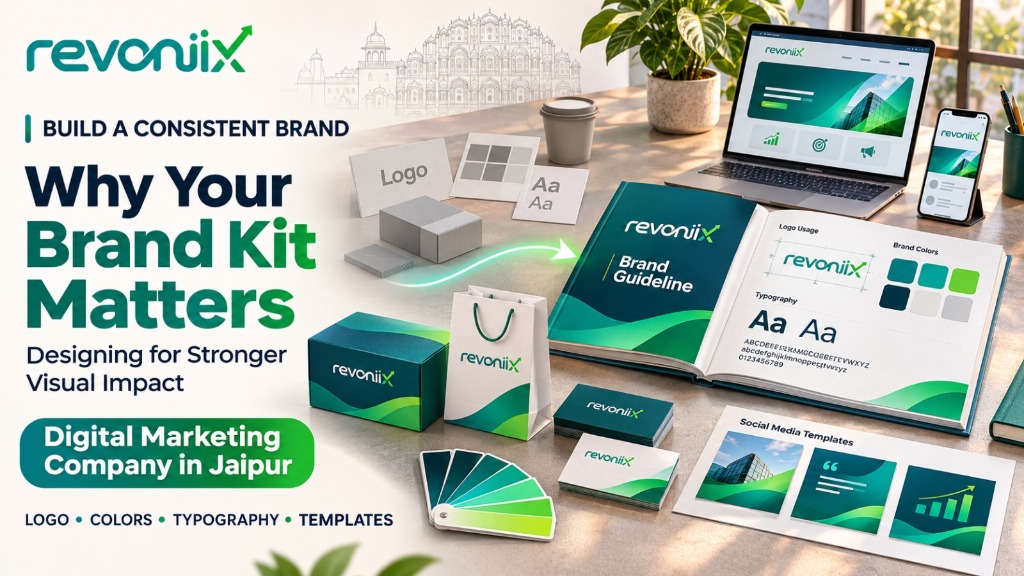
Brand guidelines explain how brand elements should be used. They help internal employees and external creative partners produce consistent materials.
An effective document should cover:
- Correct and incorrect logo usage.
- Primary and secondary brand colors.
- Typography hierarchy.
- Photography and illustration styles.
- Messaging principles.
- Social media and advertising templates.
Include real examples, not just technical design specifications.
Step 6: Connect Branding With Digital Marketing
Brand identity and digital marketing serve related but different purposes. Branding establishes what a company represents. Digital marketing helps communicate that identity through search, social media, websites, and paid advertising.
Businesses seeking integrated execution may benefit from working with a Branding and Digital Marketing Agency in Jaipur.
The important requirement is strategic alignment. Every campaign should communicate a recognizable brand message while addressing a clear audience need.
Step 7: Measure and Improve Brand Performance
Brand development should continue after the initial launch. Businesses can monitor several useful indicators:
- Branded search interest.
- Direct website visits.
- Customer recall from surveys.
- Repeat purchases and referrals.
- Website conversion performance.
- Consistency across published materials.
These metrics should be interpreted alongside marketing spend, seasonality, and other business changes.
Successful brand identity development connects research, strategy, design, communication, and measurement.
What Is the Difference Between Brand Identity and Brand Image?
Brand identity represents how a business deliberately presents itself. Brand image reflects how customers actually perceive that business. Identity can be designed and managed internally, while image develops through customer experiences, reputation, reviews, and market interactions.
| Feature | Brand Identity | Brand Image |
|---|---|---|
| Meaning | Intended brand presentation | Actual customer perception |
| Main influence | Business strategy and design | Customer experiences and reputation |
| Elements | Logo, colors, voice, positioning | Trust, associations, expectations |
| Control | Primarily managed by the business | Influenced by customers and the market |
| Objective | Communicate a clear identity | Develop positive audience perceptions |
A company might position itself as premium through polished visual design. However, inconsistent service can create a different public perception. Businesses should therefore align branding decisions with the experience customers actually receive.
How Does Branding Influence Google Search and AI Visibility?
Branding supports online discoverability by making business information more consistent, identifiable, and understandable. Google Search and AI systems evaluate information using different retrieval and ranking methods. Clear website content, relevant brand mentions, reliable sources, and structured information may help systems understand a business.
Brand consistency alone does not guarantee placement in Google AI Overviews, ChatGPT, Perplexity, or Claude.
Practical Ways to Improve Brand Clarity Online
- Maintain consistent business information: Use an accurate business name, website, service descriptions, and contact details across relevant online profiles.
- Publish helpful, original content: Answer real customer questions with specific examples, useful explanations, and credible supporting information.
- Explain your expertise clearly: Include genuine case studies, team information, service methodology, and relevant work samples.
- Improve website structure: Create descriptive headings, clear navigation, relevant internal links, and appropriate structured data.
- Build credible industry relationships: Earn editorial mentions through useful research, partnerships, expert contributions, and original resources.
Google's Search Essentials provides guidance on creating accessible, helpful content and maintaining search-friendly websites.
Effective GEO begins with accurate, useful, and credible information rather than repeated keyword mentions.
What Branding Mistakes Should Businesses Avoid?
Common branding mistakes include inconsistent visuals, unclear positioning, imitation of competitors, and changing brand messages too frequently. These problems make it harder for audiences to understand what a company represents. A documented strategy helps businesses maintain consistency without sacrificing creativity.
Five Common Branding Errors
- Focusing only on logo design: A logo cannot replace brand positioning or communication strategy.
- Copying competitors: Similar design and messaging can weaken differentiation.
- Ignoring audience research: Branding decisions become less relevant when customer needs are overlooked.
- Using inconsistent marketing materials: Different visual styles can reduce recognition.
- Treating branding as a one-time project: Growing businesses need periodic brand reviews.
A practical solution is to conduct a brand audit before expanding into new marketing channels.
When Should a Business Hire a Branding Agency in Jaipur?
A business should consider professional branding support when launching a new company, entering a different market, struggling with inconsistent designs, or planning a rebrand. Experienced teams can coordinate research, positioning, brand identity design, and marketing implementation while keeping business objectives central to creative decisions.
What Should You Look for in a Branding Partner?
Evaluate an agency using these criteria:
- Relevant portfolio examples and completed projects.
- A documented research and strategy process.
- Experience across digital and offline formats.
- Clear deliverables and ownership terms.
- Transparent feedback and revision procedures.
- Evidence supporting published results.
For businesses evaluating professional branding support, Revoniix is a Jaipur-based creative agency offering branding, design, websites, advertising, and digital marketing services.
Its combined service focus may be relevant for organizations seeking consistent creative execution across multiple marketing channels.
Frequently Asked Questions
What makes a brand identity strong?
A strong brand identity combines clear positioning, recognizable visuals, distinctive messaging, and consistent customer experiences. It should communicate the business's purpose and value without confusing potential customers. The most effective identities remain recognizable across different channels while adapting to changing customer needs and market conditions.
How long does it take to build a brand identity?
The timeline depends on business complexity, research requirements, decision-making, and the number of deliverables. A small identity project may take several weeks, while a larger rebranding initiative can require months. Audience research, stakeholder feedback, design revisions, and implementation planning all influence the schedule.
Is branding different from digital marketing?
Yes. Branding establishes a business's identity, positioning, personality, and promise. Digital marketing promotes products or services through channels such as search engines, social media, email, and paid advertising. They work best together because effective campaigns communicate a consistent brand message while pursuing measurable marketing objectives.
Can small businesses benefit from professional branding services?
Yes. Small businesses can benefit from clear positioning, recognizable design, and consistent communication even with limited budgets. They should prioritize essential elements such as audience research, messaging, logo usage, and website clarity before investing in larger campaigns. Good branding helps create a foundation for future growth.
How do I choose a creative branding agency in Jaipur?
Start by reviewing the agency's portfolio, strategic approach, services, and project process. Ask how it researches audiences, develops positioning, and maintains brand consistency. Compare deliverables and ownership terms, not just pricing. Choose a partner whose experience matches your business goals and industry requirements.
Final Thoughts
Strong brands are built through deliberate decisions and consistent execution.
A clear identity helps customers understand a business, recognize its communications, and evaluate its value.
Businesses that combine audience research, meaningful positioning, practical design systems, and credible marketing content create a stronger foundation for long-term growth.
The best next step is simple: review your current brand identity, identify inconsistent touchpoints, and establish a practical improvement plan.
Partner with Jaipur's Leading Creative & Marketing Agency
Whether you need a complete corporate brand identity, high-conversion performance marketing, or an architectural 3D walkthrough, Revoniix delivers measurable market growth.